Sunsceen wasn’t made for us.
Growing up, I genuinely believed I didn't need sunscreen. The worst sunburn I ever got was a little peeling on the tip of my nose, and honestly? It was kind of a novelty. Like, “oh wow, I got my first sunburn.”
So the logic made sense to me: if the sun isn't hurting me, I must be fine. It wasn't until I started my esthetics training that I learned the sun absolutely was affecting my skin. Just not in any of the ways I'd been taught to look for.
Sun damage on darker skin doesn't show up as a burn. It shows up as dark spots that won't budge. As acne marks that are still there a year later. As uneven tone that no serum seems to fix. By the time most of us connect the dots, the damage has been building for years, and we had no idea because we were looking for the wrong signs. That shift in understanding changed how I approach skincare, both for myself and with every client I see. And if there's one thing I want people with melanin-rich skin to walk away knowing, it's this: sunscreen isn't for people who burn. It's for everyone.
Where Did This Belief Even Come From?

Here's the thing though. The belief that sunscreen isn't for us wasn't something our communities just made up. It was built over decades by systems that were never designed with us in mind. The medical system failed us first. Dermatologists historically weren't trained on darker skin tones, which meant the people who were supposed to give us accurate information simply didn't.
A 2014 study found that Black patients were prescribed sunscreen nine times less than white patients by their own doctors. Nine times. That's a generation of people leaving doctor's offices without ever being told sunscreen applied to them.
For decades, every sunscreen campaign featured white people at the beach. The message was implicit but clear: “this product isn't for you.” And when people with darker skin did try mineral SPFs, we were met with a chalky white cast that made the products unwearable. So we stopped trying, and nobody in the industry seemed to care enough to fix it.
Melanin does offer some protection from UV radiation. But somewhere along the way "it offers some protection" became "we don't need it at all," and that misunderstanding got passed down like it was fact. The result: a 2023 survey found that 61% of Black people say they never wear sunscreen.
But now that we have better information and better products, we can actually do something with it.
The Myth: Melanin Is Natural Sun Protection
Melanin does offer some natural protection from UV radiation. Deeper skin tones have a higher natural SPF equivalent (roughly SPF 13, compared to about SPF 3 for lighter skin). But SPF 13 is nowhere near enough for daily protection, and dermatologists recommend a minimum of SPF 30 for everyone regardless of skin tone.UV rays still penetrate. They still cause damage. The difference is that in melanin-rich skin, that damage shows up in ways that are easy to miss until they're already a serious problem.
What Sun Damage Actually Looks Like on Deeper Skin Tones
Dark spots and hyperpigmentation that take months or years to fade Post-inflammatory hyperpigmentation (PIH) that deepens every time you step outside unprotected. Uneven skin tone that brightening products can't fully correct if you're still getting daily exposure. Premature aging in the form of fine lines and loss of elasticity, which does affect melanin-rich skin, just typically later in life
Here's the science behind why it lingers so long: research presented at the 2025 Skin Spectrum Summit found that it's not that darker skin produces more melanin, it's that the organelles that carry melanin (called melanosomes) are physically larger in deeper skin tones and take significantly longer to break down. More melanin sitting in the skin at any given time means spots that are darker and slower to fade than they would be in lighter skin. Anything that triggers melanin production, including unprotected sun exposure, hits harder and stays longer.
And a 2025 systematic review confirmed that of all the prevention methods studied for post-inflammatory hyperpigmentation in skin of color, sunscreen had the highest success rates across the board.
Let's Talk About PIH

If you have melanin-rich skin and you've ever dealt with acne, a rash, irritation from waxing, or really any kind of inflammation, you've probably dealt with PIH. Post-inflammatory hyperpigmentation is the dark mark that gets left behind after your skin heals from trauma.
Here's what's happening: when your skin experiences inflammation (from a pimple, a bug bite, a chemical reaction, anything that causes irritation), your melanocytes respond by producing more melanin. It's essentially your skin trying to protect itself. But in darker skin tones, melanocytes are more reactive and tend to overproduce. So instead of a faint pink mark that fades in a few weeks, you get a deep brown or purple spot that can take six months to a year, sometimes longer, to fade on its own.
UV exposure directly stimulates melanin production. So every time you step outside without sunscreen while you have active PIH, you are feeding those dark spots.
This is why I tell every client treating hyperpigmentation that the best product in their routine isn't the brightening serum. It's the SPF. You can't treat your way out of damage you're actively making worse. And here's the harder truth: PIH is one of those things that is significantly easier to prevent than it is to reverse. Once it's there, you're playing a long game. We're talking months of consistent treatment, and even then results aren't guaranteed. But if you're wearing SPF daily, you're stopping the cycle before it starts. Prevention isn't the boring answer. For melanin-rich skin, it's genuinely the most powerful one.
The Real Problem: Most SPF Wasn't Made for Us
The beauty industry has been slow to create sunscreens that work well on deeper skin tones.
Mineral sunscreens (zinc oxide, titanium dioxide) are the gold standard for sensitive, acne-prone, or reactive skin. But they're notorious for leaving a chalky white or gray cast, which makes them nearly unwearable on brown and Black skin.
Chemical sunscreens absorb into the skin and don't leave a cast, but they can irritate sensitive skin and aren't ideal for everyone.
The good news: the market has genuinely improved. There are more options than ever that offer broad-spectrum protection without looking like you rolled in chalk.
Two SPFs I Recommend for Melanin-Rich Skin
Both of these are from Circadia, the line I use and trust in my treatment room. They work well on deeper skin tones for different reasons.
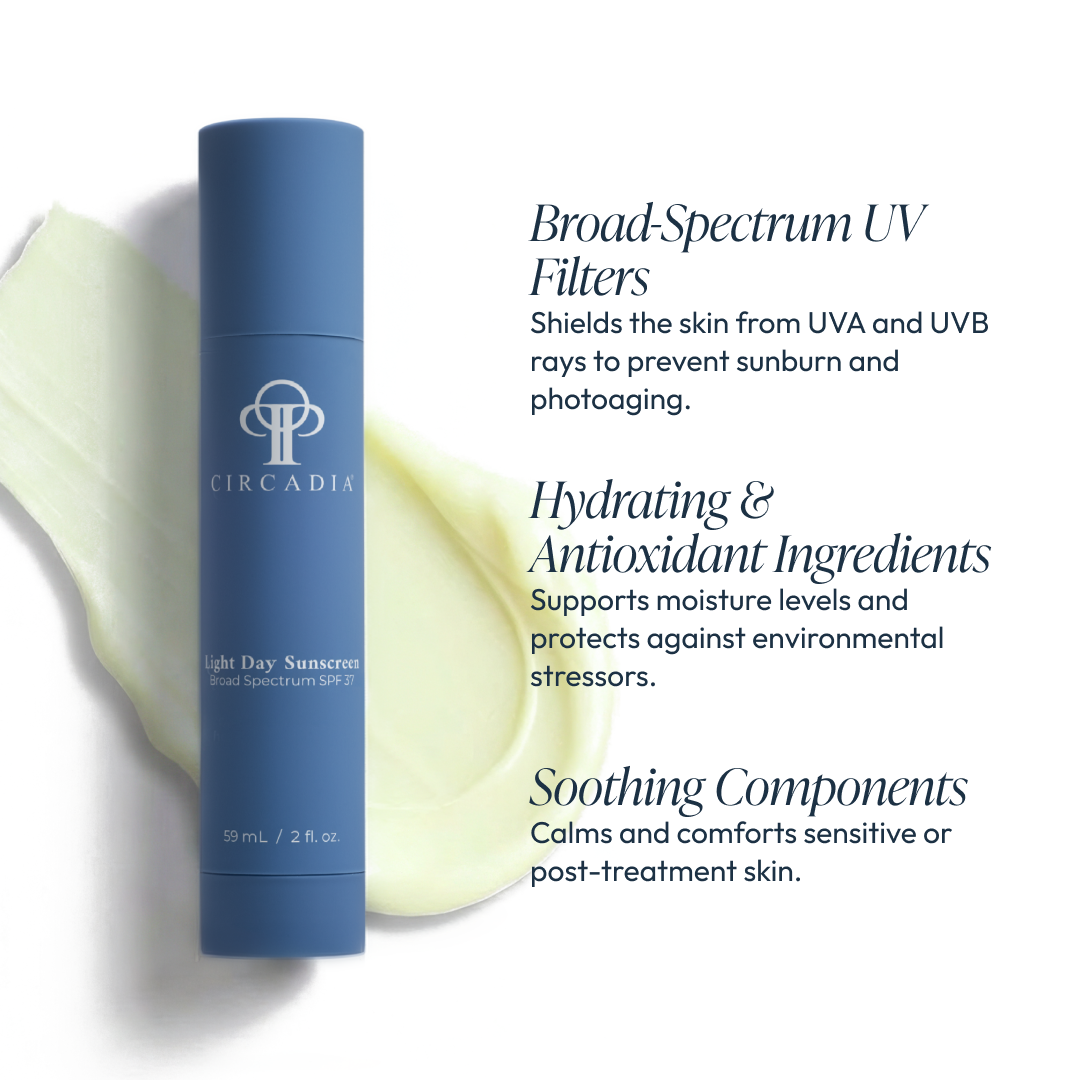
Light Day Sunscreen Broad Spectrum SPF 37
A lightweight chemical SPF that disappears completely into the skin. No cast at all, which makes it a favorite for deeper skin tones that want that clean, no-residue finish. It's packed with antioxidants including grape stem cell extract and Lipochroman 6, which neutralizes free radicals and slows premature aging. It's also one of the few SPFs that's safe to use immediately after waxing, peels, and professional treatments.If you're not sure which one is right for your skin, that's an easy conversation to have at your next appointment.
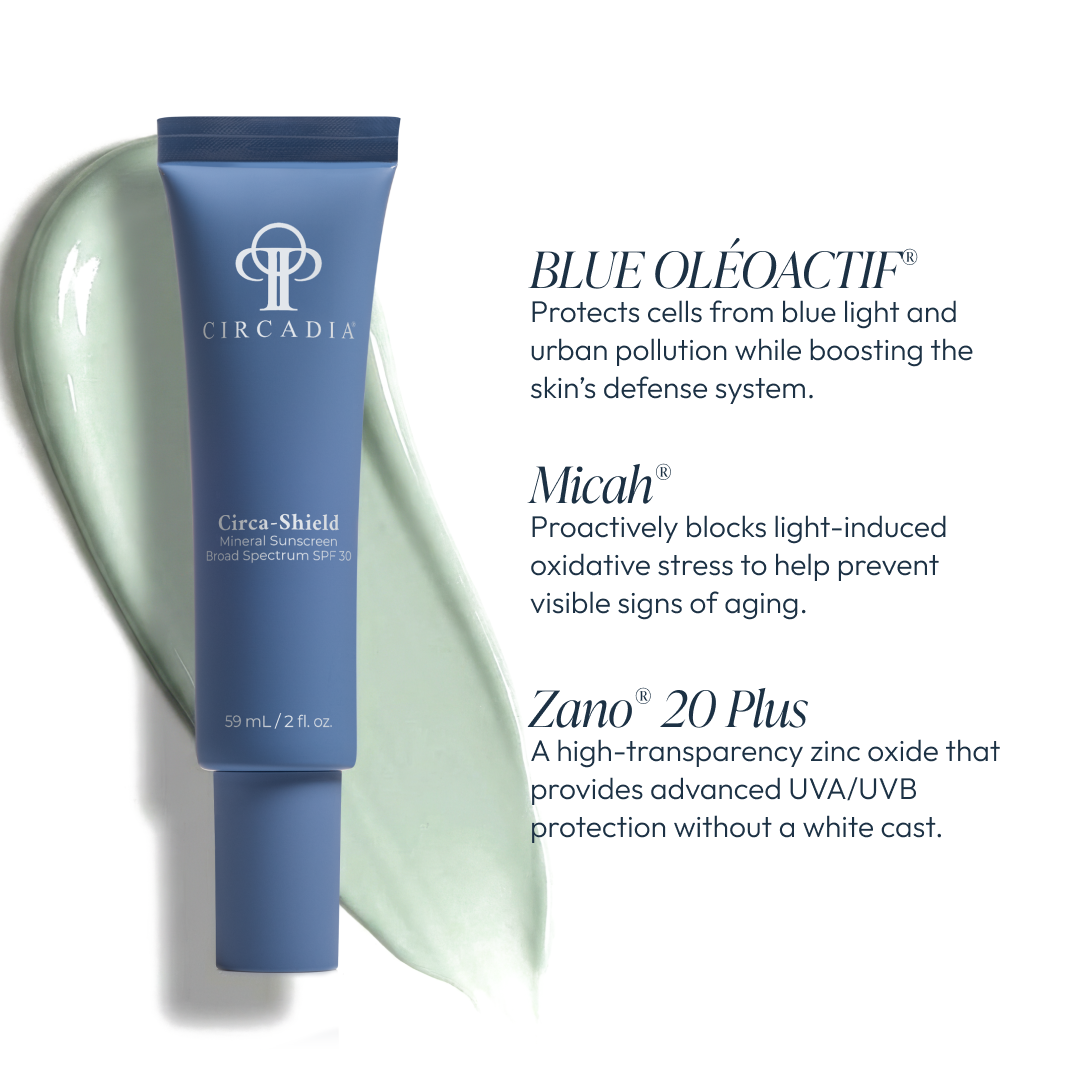
Circa-Shield Mineral Sunscreen SPF 30 . This is the one I reach for with acne-prone or reactive skin. It's mineral-based (zinc oxide), which normally means white cast, but Circadia uses Zano 20Plus, a zinc oxide specifically formulated for high transparency. It goes on much more sheer than traditional mineral SPFs. It also has Blue Oléoactif to protect against blue light from screens, which is a bonus if you're working from a phone or laptop all day. Great for barrier-compromised or sensitive skin.
The Bottom Line
SPF isn't optional. It's the most important step in any skincare routine, full stop.
If you're investing in facials, actives, or acne treatments and skipping sunscreen, you're undoing your progress every morning. We weren't taught this. Most of us grew up thinking sunscreen was for people who burn, and since we didn't burn, we figured we were covered. But now you know.
The right formula exists for your skin. And if you're not sure where to start, that's exactly what I'm here for.
Want personalized product recommendations or help building a routine that actually works for your skin?